


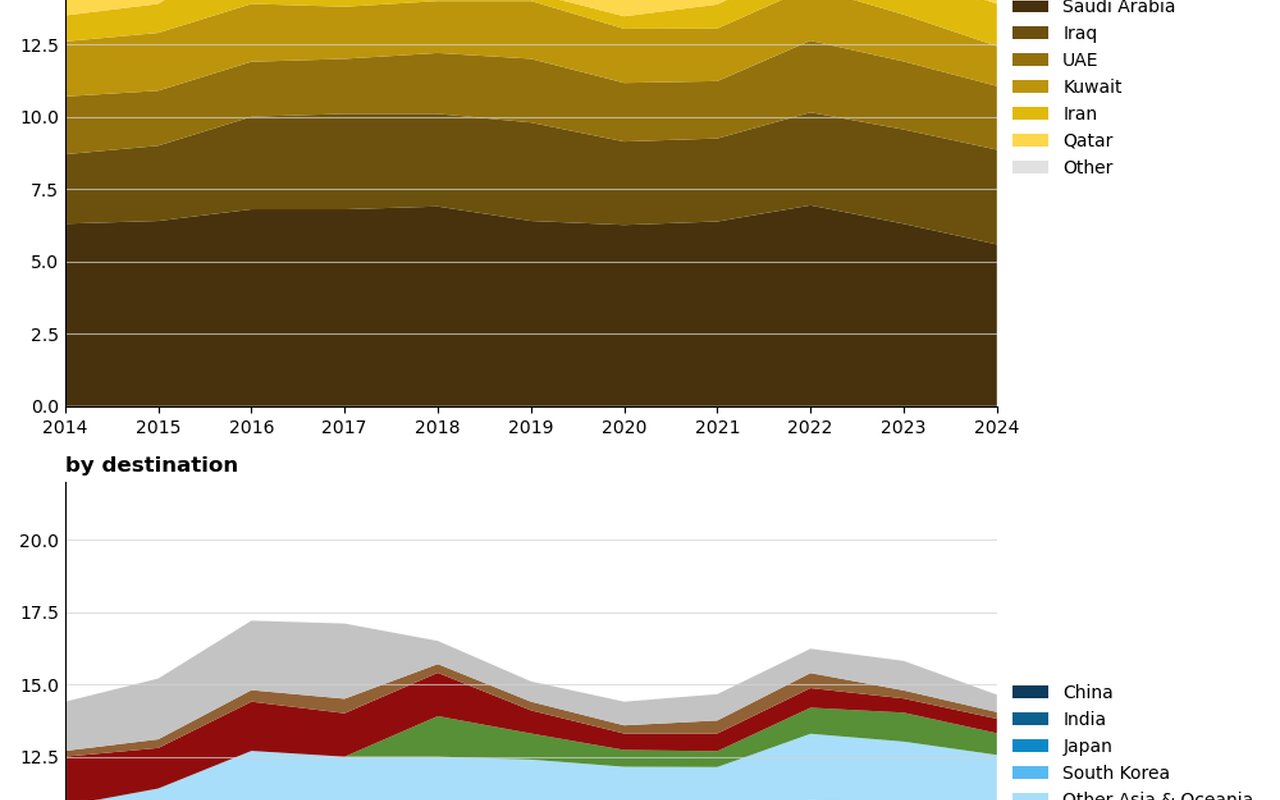
Oil futures moved lower on Friday as traders closed out the week with prices heading for losses, while shipments through the Strait of Hormuz continued to face sporadic disruption. For international investors and businesses that trade with India, the situation underlines an ongoing supply risk for a country that remains a major oil importer.
Market moves and immediate drivers
Benchmarked crude futures in major trading centres traded lower on the last session of the week after a period of choppy activity tied to shipping and geopolitical developments in and around the Strait of Hormuz, a narrow waterway that connects Gulf oil exporters with global markets. Traders cited uneven tanker movements and temporary rerouting as factors that kept the market nervous, even as other variables — including stock levels in consuming countries and regional refinery throughput — provided countervailing pressure.
Analysts and market participants described the condition of flows through the strait as “choppy”, meaning that vessel transits were uneven rather than entirely halted. Some shipments were delayed or rerouted. Reports about incidents and near-misses in the wider Persian Gulf region have amplified concerns among shipping firms and insurers, influencing shipping schedules and costs. Where confirmation was lacking, sources used the term “unconfirmed” to flag claims that had not been independently verified.
Why the Strait of Hormuz matters to global and Indian markets
The Strait of Hormuz is one of the world’s most important maritime chokepoints for crude and petroleum product shipments. A large share of the oil exported by Gulf producers moves through this corridor to buyers in Asia, Europe and beyond. When traffic is disrupted, buyers often need to find alternative cargoes or routes, which can change trade patterns and raise short-term logistical costs.
For India, the situation matters because the country imports the bulk of its crude oil needs. Indian refiners and trading houses buy cargoes from Middle Eastern suppliers, and delays or added transit costs can affect the timing and economics of those purchases. Higher logistical uncertainty can influence margins for refiners, cash flow for trading companies, and ultimately petrol and diesel pricing decisions that domestic policymakers monitor closely. International investors with exposure to Indian energy companies and to global shipping insurers will watch these developments for potential portfolio impacts.
Implications for Indian firms and the domestic market
Companies in India’s energy and shipping sectors are sensitive to changes in crude availability and freight rates. Public and private refiners that routinely process imported Middle Eastern crude can face tighter crude procurement windows when shipments are disrupted. Larger conglomerates with integrated trading arms may reallocate cargoes or turn to alternative grades; independent refiners and dealers may have less flexibility.
For India’s broader economy, prolonged shipping disruptions could complicate subsidy calculations and fiscal planning if domestic fuel prices move sharply. Policymakers may also monitor insurance and freight cost movements if they become a persistent factor for import bills. It is important to stress that, at the time of reporting, there is no confirmed evidence of a sustained closure of the strait; disruptions have been described by market sources as intermittent and uneven.
Outlook for traders, refiners and foreign investors
Market participants are likely to continue watching shipping reports, vessel-tracking data and statements from regional authorities to gauge whether the current choppiness becomes a longer-term constraint. Traders often respond quickly to new information about tanker movements and insurance announcements, which can create short-term volatility in futures markets.
For international investors and businesses with links to India, two points are relevant. First, changes in crude flows can shift the timing and cost of energy imports, which filters into corporate margins and national trade balances. Second, stock prices and credit conditions for Indian energy companies can react to sustained price swings or prolonged logistic disruptions; investors should therefore track company disclosures and government commentary. Where market reports cited incidents that were not independently verified, readers should treat those claims as unconfirmed until authoritative sources provide confirmation.
This article was produced with AI assistance and checked before publication. Editorial policy

