


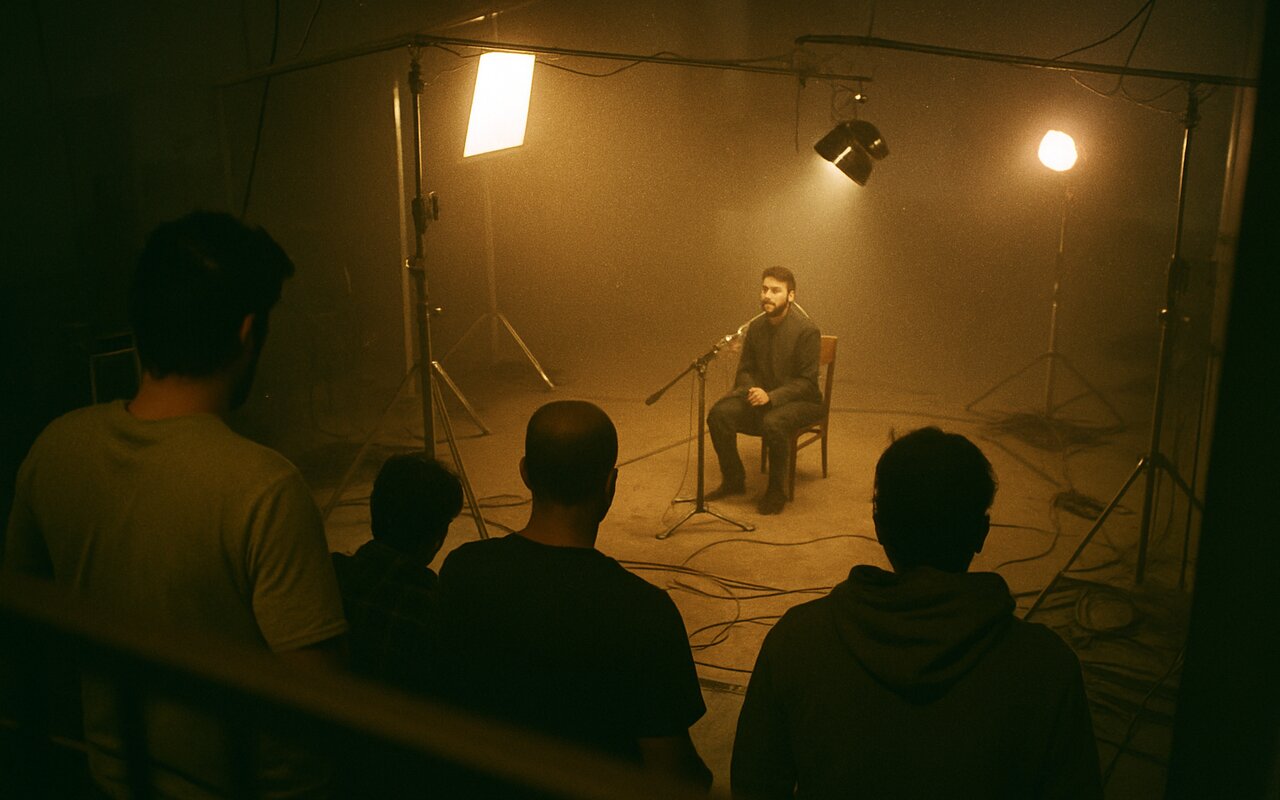
Mustafa Zahid, a Pakistani singer who has worked on songs linked to Indian films, has written an emotional note in response to the makers of Awarapan 2, saying the project honoured his legacy. The brief statement underlines how music and film projects continue to forge cultural ties across the India–Pakistan border, even as other exchanges remain limited.
What Mustafa Zahid said — and what is confirmed
According to a report in The Times of India, Mustafa Zahid shared a note about Awarapan 2 in which he described receiving “what I wanted: dignity and love.” The exact wording of his message and the circumstances in which it was posted have been reported by that outlet; I have not independently verified the full text beyond that report.
Zahid is identified in news coverage as a vocalist whose work has had presence in popular South Asian music and films. In his note, he framed the makers’ approach to the film and its music as a form of recognition for his artistic contribution. The Times of India article presents his message as heartfelt and appreciative; other corroborating public statements or documents were not cited in that piece.
Why this matters for Indian cinema and international readers
Awarapan 2 is a sequel to a film that originally involved Indian filmmakers and music that reached audiences across South Asia. When artists from Pakistan and India are publicly acknowledged in association with Indian film projects, it serves as a reminder that the entertainment industries in both countries remain culturally intertwined. For readers abroad, this matters because Bollywood and South Asian cinema are not only regional phenomena: they have sizeable diasporic audiences, influence streaming platforms, and contribute to cross-cultural exchanges in music and storytelling.
The public acknowledgement by an artist like Mustafa Zahid can affect how a film is perceived by viewers who remember earlier collaborations. It also influences media coverage and marketing narratives — especially in territories where South Asian films reach a mixed Indian and Pakistani diaspora, and where cultural diplomacy through soft power matters to producers and distributors.
Context: cross‑border collaboration and its limits
Collaboration between Indian filmmakers and Pakistani artists has a history of ups and downs. At times, Pakistani singers, composers and actors have lent their talents to Indian films and music albums; at other times, political tensions have curtailed the visibility or participation of Pakistani artists in India. Recent years have seen fluctuations in access, travel and broadcasting that affect how widely such collaborations are promoted.
A public statement from a Pakistani artist about an Indian film project—especially one that uses words like “dignity and love”—is noteworthy in this context because it signals approval of how the project has represented or engaged with that artist’s work. For industry watchers abroad, it can be a prompt to reassess how content might be marketed to different diaspora communities and which platforms may be open to cross‑border content.
What remains unconfirmed and why that matters
The Times of India report provides the core claim about Mustafa Zahid’s note, but several details remain unconfirmed in public reporting: the full text of the note beyond the quoted phrase, whether additional correspondence took place between the artist and the filmmakers, and which particular elements of the Awarapan 2 production prompted his response. It is also not clear from that piece whether the film’s music includes new performances by Zahid, reuses older recordings, or simply references his legacy.
For readers outside India, uncertainty about these points matters because it affects how one interprets the significance of the note: a single public thank‑you is different from a formal collaboration or credit in the film’s soundtrack. Producers’ and artists’ statements can carry commercial implications—such as soundtrack releases and promotional tours—that depend on formal agreements and rights clearances, which were not documented in the article.
This article was produced with AI assistance and checked before publication. Editorial policy
