


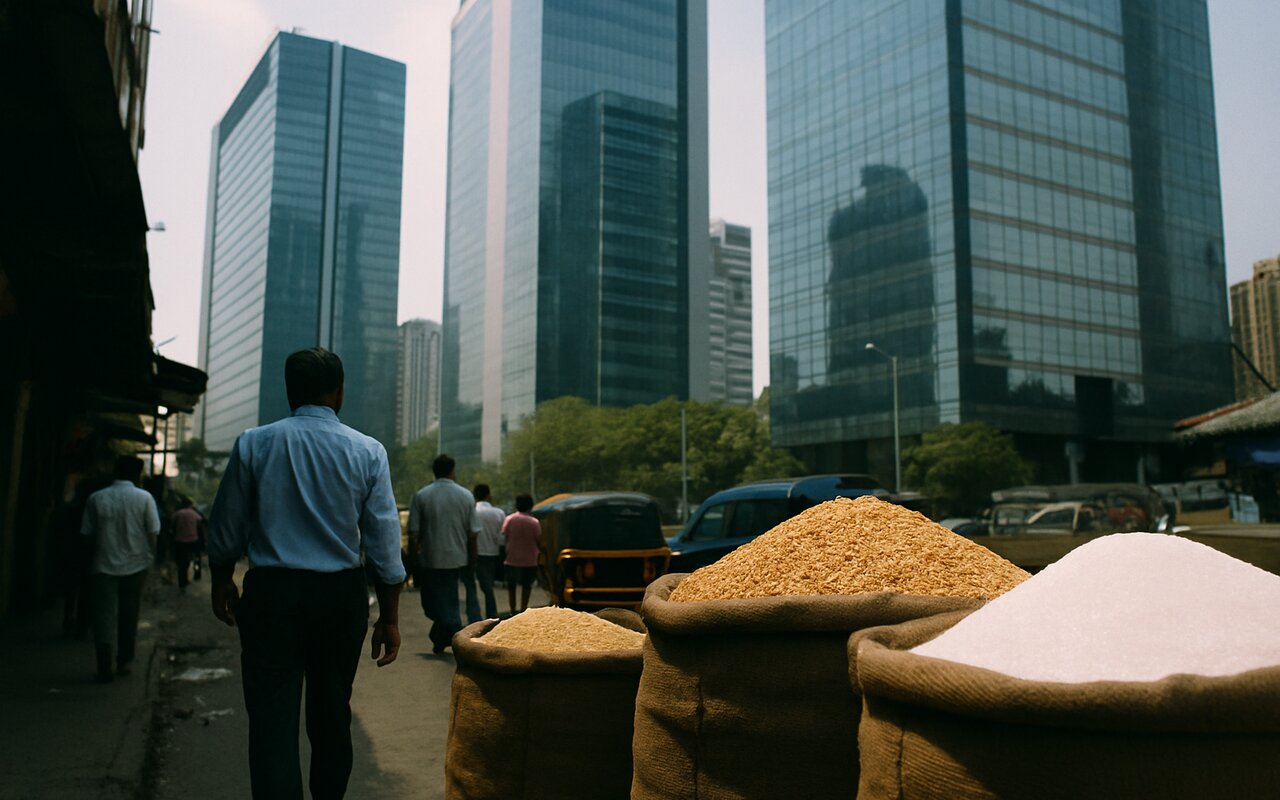
International food prices rose in July, driven by firmer cereal and sugar quotations, according to recent market reports. For India — a major producer and consumer of staples — the move has implications for inflation, trade balances and agricultural businesses that supply global markets.
What happened on world markets
Global food-price measures recorded an increase in July, with cereals and sugar identified as the main contributors to the uptick. Analysts and commodity-watchers pointed to stronger demand and tighter supply sentiment for some crops as reasons behind the change in prices. Reports also noted mixed movements across other food categories; not all sub-sectors rose in price during the month.
The primary sources for the July assessment are international price indexes and commodity exchanges that track monthly movements in staple markets. I can confirm that cereals and sugar rose in July; detailed, official index numbers for the month were not provided in the initial report cited here, and any precise percentage change is therefore unconfirmed in this article.
Why cereals and sugar matter to India
India plays a substantial role in both cereals and sugar markets. It is a leading producer of rice and a major producer of wheat and coarse grains used domestically and exported regionally. India is also among the world’s largest sugar producers and exporters in many years, with a sizeable domestic industry that supplies mills, refiners and manufacturers.
A rise in global cereal prices affects India in several ways:
– For exporters, higher international prices can improve revenue prospects for companies that sell rice, wheat and other grains abroad. Public and private trading houses that handle exports may see improved margins if they can secure supplies domestically at stable costs.
– For importers and domestic consumers, higher world prices can feed through to elevated costs for imported feed grains, edible oils and processed food ingredients. This is particularly relevant for commodities where India relies on imports to meet domestic demand.
– For policymakers, upward pressure on global food prices adds another variable when setting procurement targets, minimum support prices (MSP), export policy and buffer stock releases. Historically, India has used trade measures and domestic procurement to smooth price volatility; traders and farmers monitor these policies closely.
For sugar specifically, higher world prices can directly affect mills and sugar traders. Producers may find export opportunities more lucrative, but domestic government policy on export quotas, subsidies and guaranteed procurement can determine how much of those global gains are realised by industry versus diverted into domestic supplies.
Implications for inflation, markets and companies
Food prices are a key component of consumer inflation in India. An increase in global food prices can translate into higher domestic prices if imports become costlier or if local prices follow international trends. For households, especially lower-income groups that spend a large share of income on food, persistent food inflation raises real living costs.
Financial markets pay attention to food-price trends because they can influence central bank policy. If food inflation remains elevated, it can complicate the Reserve Bank of India’s assessment of overall inflation and growth, potentially affecting interest-rate decisions. Commodity-sensitive sectors — FMCG companies, food processors, packaged-food brands and animal-feed manufacturers — monitor these price signals when setting procurement strategies and pricing policies.
Companies exposed to agricultural commodities may respond in several ways: locking in forward contracts, hedging on futures markets, adjusting product mixes or passing costs to consumers. For listed firms, margin impact depends on the company’s ability to source cheaper inputs or raise prices without losing market share.
What to watch next
Several factors will determine whether July’s rise in global food prices becomes a sustained trend or a short-lived blip:
– Weather and crop prospects in major producing regions, including South Asia, South America and the Black Sea grain region. Crop progress reports and harvest estimates can shift market sentiment.
– Policy moves by major exporters and importers. Export curbs, subsidies, changes in duty structure or stock releases influence global availability and pricing.
– Demand trends from large importers, including China and the European Union, and feed demand from expanding livestock and aquaculture sectors.
– Currency movements, which affect import costs for countries like India that buy agricultural inputs from overseas.
For international readers, the relevance is twofold: first, changes in global food prices influence inflation and consumer spending in India, which in turn affects India’s economic growth trajectory and demand for commodities and consumer goods. Second, multinational food companies and commodity traders with exposure to India will see impacts on supply chains, margins and trade flows.
This report is based on public market commentary noting that cereals and sugar were costlier in July; specific index values or percentage changes for July were not provided in the source and are therefore unconfirmed here. For ongoing tracking, follow crop-condition updates, trade-policy announcements from key producing countries and monthly food-price index releases from international agencies and exchanges.
This article was produced with AI assistance and checked before publication. Editorial policy
